

If you live in the Charleston area, you know how quickly a heavy rainstorm can turn a yard into a pond. Outdoor drains are designed to handle all that Lowcountry runoff, but when they clog with leaves, mud, or grass, water has nowhere to go. Over time, that standing water can damage your lawn, patio, or even your home’s foundation. So, what’s the best way to keep things flowing and get your outdoor drain unclogged safely?
Why Outdoor Drains Clog So Often in Charleston
Here in the Lowcountry, outdoor drains are under extra stress because of our climate and geography. Heavy rainfall means more dirt, sand, leaves, and grass washing into the system, especially in lower areas like Mount Pleasant, James Island, and Johns Island.
When water can’t drain properly, it tends to carry small debris with it. Over time, that debris builds up inside the pipe, and since we’re so close to sea level, the drains don’t have much gravity to help flush everything away. That combination makes regular maintenance more important in Charleston than in most other regions.
Charleston Rainfall and Yard-Drainage Conditions
Charleston’s climate is a big part of why outdoor drains here need more attention than they might in a drier or hillier region. Charleston receives an average of around 52 inches of precipitation per year, with the majority falling in the summer months, and July and August tend to be the wettest. That’s well above the national average, and much of it arrives in short, intense downpours rather than gentle, steady rain, exactly the kind of storm that overwhelms a yard drain in minutes.
A few local factors make this worse:
- Flat, low-lying terrain. Charleston and the surrounding islands sit close to sea level, so there’s little natural slope to help water and sediment move through outdoor drain lines on their own.
- Sandy, loose soil. Lowcountry soil erodes easily in heavy rain, and that sand and silt washes straight into drain grates and settles inside the pipe.
- High water table. Groundwater sits close to the surface in much of the area, which means drain lines have less room to fully empty between storms, giving debris more opportunity to settle instead of flush through.
- Hurricane and tropical storm season. Between June and November, Charleston can see sudden, heavy rain events that flood yards fast, pushing leaves, mulch, and debris into drains all at once.
Because of these conditions, an outdoor drain that would go years without issue in a drier climate may need attention multiple times a year here. That’s why local homeowners typically need a more proactive maintenance schedule than the national average.
Step-by-Step: How to Unclog an Outdoor Drain
If your yard is holding water and you suspect a clogged outdoor drain, work through these steps in order.
Step 1: Locate and Confirm the Clog
Find the drain grate or cover where water is backing up. Look for standing water pooling around it, a slow trickle instead of a steady flow, or debris piled on top of the grate. Confirming exactly which drain is affected helps you figure out whether it’s an isolated clog or a sign of a bigger drainage issue.
Step 2: Clear Surface Debris by Hand
Lift or remove the drain grate and clear away any visible leaves, mud, grass clippings, or sticks sitting on top or just inside the opening. This is often enough to resolve a minor, surface-level clog and it’s the safest first step before using any tools.
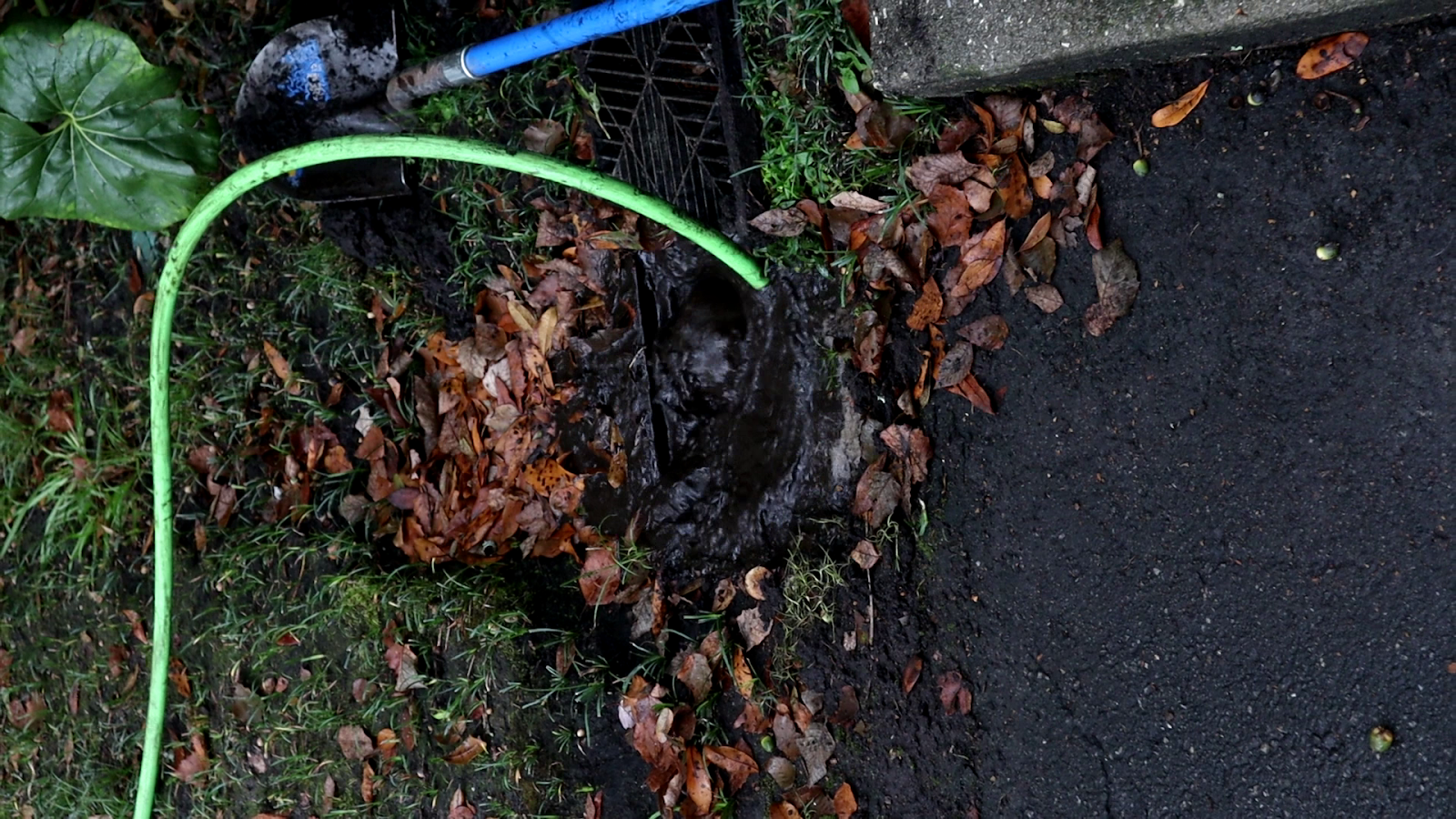
Step 3: Flush the Drain with a Garden Hose
Once the surface debris is cleared, run water into the drain with a garden hose on a steady stream. If the water drains normally, the clog was likely just surface buildup. If water backs up or drains slowly, the blockage is deeper in the line.
Step 4: Try a Plumbing Snake for Deeper Clogs
For clogs that don’t clear with a hose, a flexible plumbing snake can help break up and pull out debris further down the pipe. Feed it in slowly and avoid forcing it — a metal snake used in a thin or flexible outdoor drain pipe can crack or puncture the line, so go gently and stop if you feel strong resistance.
Step 5: Know When to Call a Professional
If the clog keeps coming back, affects more than one drain, or doesn’t respond to a hose or snake, it’s time to bring in a professional. At this stage, tools like hydro jetting use high-pressure water to break up and flush away years of dirt, roots, and buildup without damaging the pipe, and drain cameras can pinpoint exactly where a clog or collapse is hiding, saving you from unnecessary digging
A Real-World Example from Johns Island
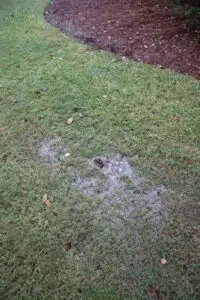
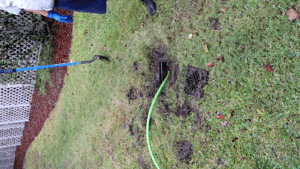
Recently, our team was handling a standard jetting job on Johns Island when we ran into something unexpected. After clearing out the first two drain covers with high-pressure water, we noticed a puddle forming nearby. At first, we thought it might be a leak or even a burst pipe underground. But once we started digging, we uncovered a hidden drain completely covered by sod.
It was one of those moments that reminds you how unpredictable outdoor drainage systems can be, especially when they’ve been buried or altered by landscaping over the years. The good news? Once we cleared that hidden drain, everything flowed like new again.
DIY or Call the Pros? How to Tell
If your clog is simple and accessible, you might be able to handle it yourself. For instance, if leaves or surface debris are visible near the drain cover, you can remove the grate and pull them out by hand.
But if the clog keeps coming back, affects multiple drains, or is buried deep in the line, that’s a sign it’s time for professional tools. Hydro jetting, also called water jetting, is one of the most effective ways to clear outdoor drains for good. It uses high-pressure water to break up and flush away years of dirt, roots, and buildup without damaging the pipe.
Our technicians also use drain cameras and locating probes to find exactly where a clog or collapse is hiding. This kind of precision saves a lot of unnecessary digging and helps make sure the problem doesn’t come back.
Common DIY Mistakes to Avoid
One of the biggest mistakes homeowners make is trying to force a clog loose with the wrong tool. Using a metal snake in a thin or flexible drain pipe can cause cracks or even puncture the line. Another common issue is timing. People often spend the whole day fighting a clog before calling for help in the evening, which can lead to after-hours service costs.
If you’re not sure what you’re dealing with, it’s usually better to stop early and have a professional take a look. You’ll save time, money, and stress in the long run.
Preventing Future Outdoor Drain Clogs
 In Charleston’s climate, prevention really pays off. Many homeowners schedule preventative jetting once a year, while others with heavier runoff do it 2–4 times annually. Keeping the area around your drain covers clear of leaves, mulch, and debris makes a huge difference.
If your drain doesn’t have a grate or cover, investing in one can help keep out larger debris like grass clippings and branches. After storms, take a minute to inspect your drains because even a quick check can help you prevent a future clog.
Keep the Lowcountry Flowing
Outdoor drains work hard year-round in Charleston’s wet, sandy climate. Whether you’re dealing with a stubborn clog or just want to stay ahead of one, knowing what to look for and when to call for help makes all the difference. If you’ve noticed recurring drainage problems or other warning signs around your property, it may be worth reading Is Your Yard Trying to Tell You Something About Your Sewer? before a minor issue becomes a major repair.
Sometimes a little maintenance goes a long way, and your outdoor drain will thank you the next time those heavy rains roll in. Call Rooter Man Plumbing at (843) 402-7799 to schedule your service today, or visit us online at rootermansc.com. Also be sure to follow Rooter Man Charleston on all major social media platforms.