

Two teenagers, a middle schooler, and two adults all trying to get out the door by 7:15. Somebody always loses. Usually it is whoever showers fourth, and they have opinions about it.
Running out of hot water is almost never a broken water heater. It is a water heater that was correct for the family who lived there in 2009 and has been wrong ever since. Water heater installation in Charleston, SC gets sized off the house, and houses do not tell you how many people are in them.
What size water heater does a family of five need?
A household of five typically needs a 66 to 80 gallon tank, or a tankless unit rated around 7 to 8 gallons per minute for this climate.
The number that matters is not tank size, though. It is first hour rating, which combines how much water the tank holds with how fast it reheats. A 50 gallon gas heater with a strong burner can deliver more hot water in the first hour than a 65 gallon electric with a weak element.
Look for the first hour rating on the yellow EnergyGuide sticker. For five people, you want 75 to 90 gallons in that first hour.
Rough tank guidance by fuel:
- Gas, family of five: 50 to 60 gallons, first hour rating 80 to 95
- Electric, family of five: 66 to 80 gallons, first hour rating 75 to 85
Electric needs the bigger tank because recovery is slower. A gas burner reheats a tank in about an hour. Standard electric elements take two to three. If your household showers back to back, that recovery gap is the whole story.
How do you calculate your household’s peak hour demand?
Add up the hot water you use during your busiest hour, and size to that number rather than to your daily total.
Typical usage figures:
- Shower: 10 to 20 gallons each
- Bath: 20 gallons
- Dishwasher run: 6 gallons
- Clothes washer, warm cycle: 15 to 20 gallons
- Hands and face at a sink: 2 gallons
A realistic weekday morning for five people might be four showers at 15 gallons plus a load of laundry. That is 80 gallons in about ninety minutes. A 50 gallon electric tank with a 62 gallon first hour rating cannot cover that, and the fourth shower goes cold at minute six.
Charleston adds a wrinkle most sizing charts ignore. Incoming groundwater here runs warmer than in northern states, roughly 65 to 70 degrees much of the year against 45 to 50 up north. Warmer inlet water means less energy to reach temperature, so a tank recovers faster here than the same tank would in Ohio. You get slightly more real capacity out of a given size.
That helps at the margin. It does not rescue an undersized unit.
Should a family of five get tankless?
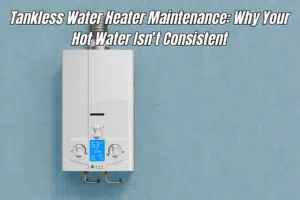
Tankless works well for a household of five when the gas supply and venting support it, and it removes the running out problem entirely since it heats water as it flows.
The sizing question changes. Instead of gallons stored, you size on flow rate and temperature rise. Two showers running at once need about 4 gallons per minute. Add a dishwasher and you are near 5.5. For a five person household you generally want a unit rated 7 to 9 gallons per minute.
Charleston’s warm groundwater is genuinely an advantage here. Temperature rise from 68 degrees to 120 is 52 degrees. In a colder climate that same unit fights a 75 degree rise and delivers noticeably less flow. Tankless units perform better in this market than their national ratings suggest.
The honest drawbacks:
- Installation costs more. Gas line upsizing and new venting are common, and the total often lands two to three times a tank replacement.
- There is a short lag before hot water arrives at the tap.
- Hard water scales the heat exchanger, so annual descaling is part of ownership.
- Electric tankless for a whole house needs electrical service most older Charleston homes do not have.
Lifespan tilts the other way. Tank heaters last 8 to 12 years. Tankless units commonly run 20, and the heat exchanger is serviceable rather than disposable.
What happens if your water heater is too big?
An oversized tank costs you money every day through standby heat loss, which is energy spent keeping water hot that nobody uses.
The penalty is smaller than it used to be. Modern tanks insulate well, and a 75 gallon unit in a conditioned space might waste only a few dollars a month over a 50. If your household size fluctuates, guests visit often, or you are planning to add a bathroom, sizing up is defensible.
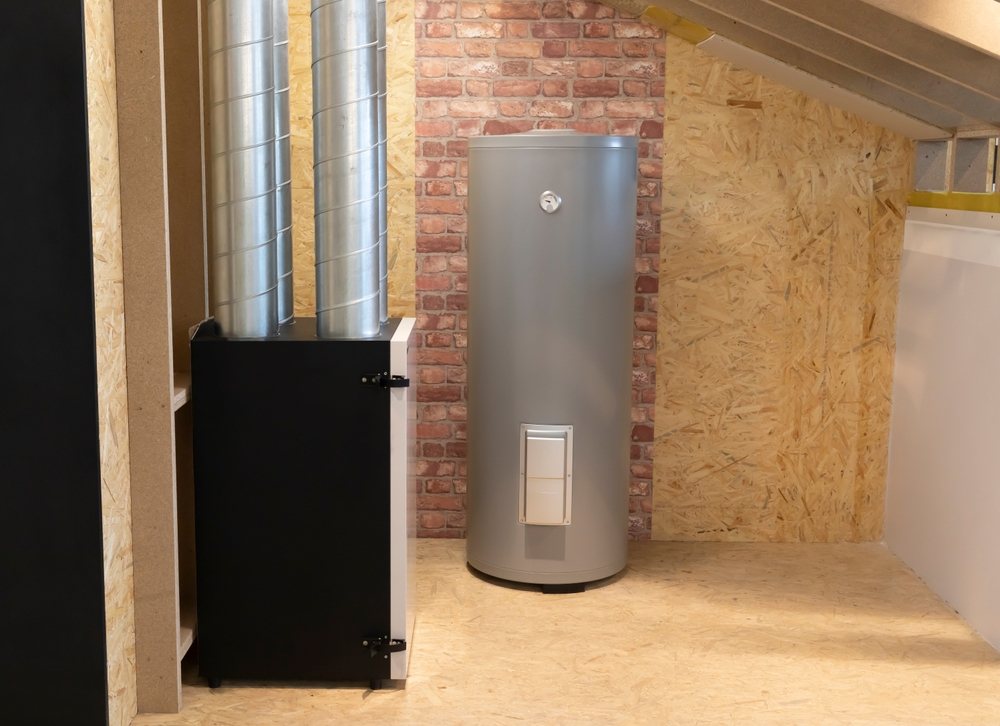
Physical fit is the more common problem. An 80 gallon tank is tall and wide, and plenty of Charleston homes have the water heater tucked into a closet, a crawl space, or a garage corner with a low ceiling. Measure before you buy, including the clearance to swing the old one out.
Older homes downtown and in the Old Village create their own puzzles. Tight mechanical closets, original framing you cannot cut, and venting paths that were laid out for a different appliance. Sometimes the answer is two smaller units instead of one large one.
A note on temperature while you are at it. Setting the tank to 120 degrees is the standard safety recommendation and reduces scald risk. Some people run 140 and mix down with a thermostatic valve, which effectively increases usable capacity, but that setup needs to be done properly.
If you are replacing a unit that never kept up, replacing it with the same size just buys you the same problem for another decade.
Tired of the last shower being the cold one? Schedule a water heater consultation with Rooter-Man and we will look at your actual usage and what your home can support.