

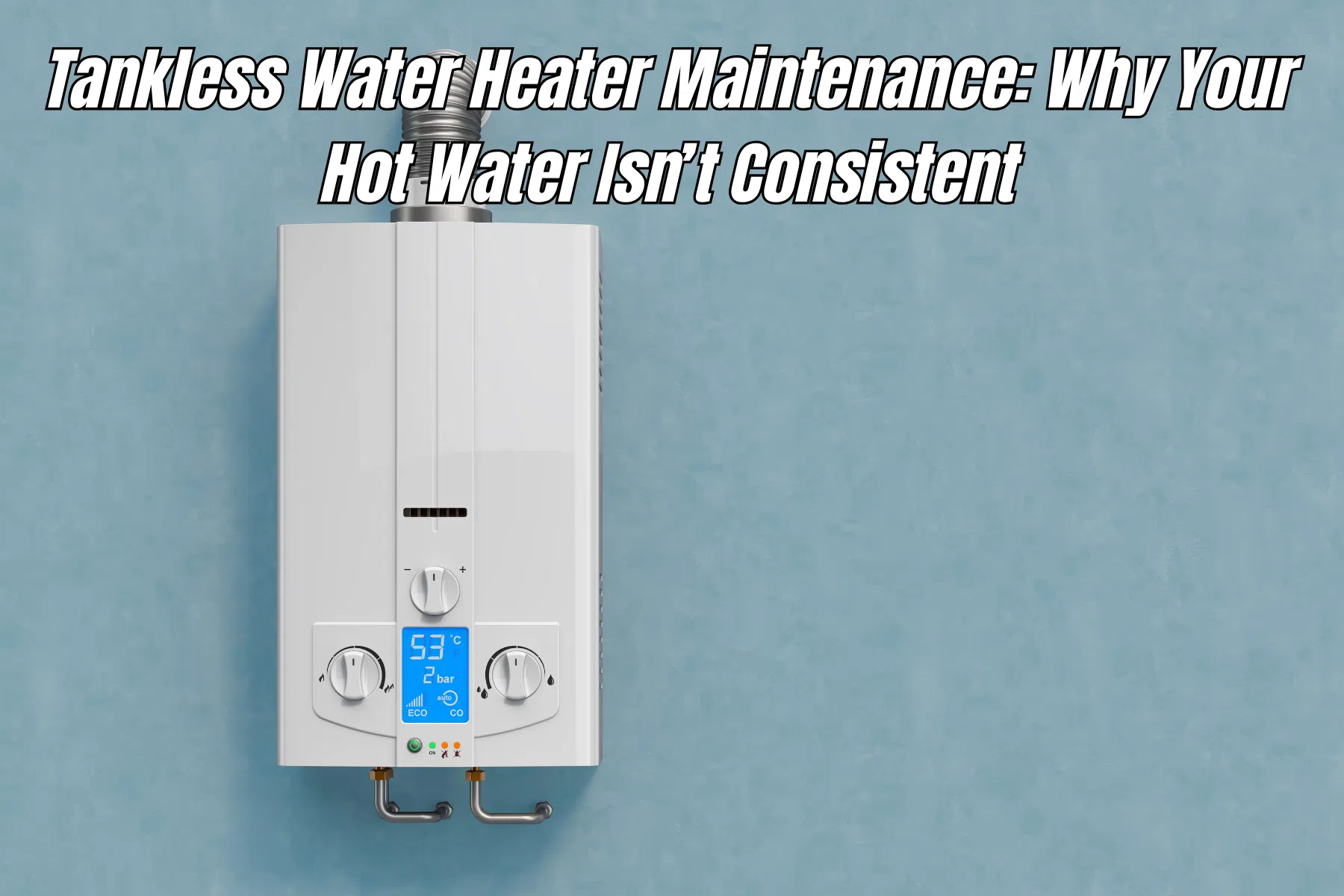
If your tankless water heater turns cold in the middle of a shower or can’t hold a steady temperature, the cause may be water flow, heating demand, mineral buildup, a plumbing problem at one fixture, or a part that needs repair. Tankless water heater maintenance can fix some of these problems, but not all of them. The pattern of when and where the temperature changes is usually the best clue.
This article covers six common patterns, explains minimum flow and heating capacity in plain terms, offers a quick symptom table, and lists what to write down before you call a plumber. Rooter Man Plumbing has served the Charleston area since April 2006, providing residential and commercial plumbing throughout Greater Charleston.
Why Does a Tankless Water Heater Go Hot and Cold?
A tankless water heater heats water only while water is moving through it, so a steady temperature depends on steady flow, enough heating capacity, and a clear water path. When any of those changes, the temperature can change with it.
According to Bosch’s tankless water heater FAQ, a unit senses water flowing through it and then fires its burners. If flow falls below the model’s minimum, the unit may not turn on or may shut down mid-use. Bosch’s guidance describes these as general principles. The exact numbers and behavior depend on the manufacturer and model.
Six Hot-Water Patterns and What They May Mean
Hot, then briefly cold, then hot again
This is often called the “cold water sandwich.” It can happen when hot water use stops and restarts, because the unit shuts down and then has to fire up again, and a short slug of cold water may pass through in between. Some models and plumbing layouts reduce it. Other problems can look similar, so a repeated or severe pattern deserves a closer look.
Hot water fades or cuts out at low flow
Every tankless model has a minimum flow needed to start and stay on. A faucet running very gently may not meet it. Low-flow fixtures, restricted flow, or a clogged inlet filter can all push flow below that threshold. Because thresholds differ by model, no single flow rate applies to every unit.
One shower is inconsistent, but everything else is fine
A problem at a single fixture does not automatically mean the water heater is at fault. A worn shower valve or faucet can let cold water blend into the hot side. Bosch notes that this kind of hot-and-cold crossover, which it says often involves a failed shower mixing valve, can slow hot flow enough to affect how a tankless unit activates and holds temperature. A plumber can check this through plumbing services that cover the home’s hot and cold piping.
Temperature drifts when several fixtures run at once
A tankless unit has a limit on how much water it can heat at one time. When a shower, dishwasher, and laundry all call for hot water together, the unit may not keep up, and the temperature can drop. Incoming water temperature also matters, since colder supply water takes more heating. Still, not every fluctuation points to an undersized unit.
Performance has slowly gotten worse
A gradual decline can come from mineral scale or a restricted inlet filter limiting flow through the unit. Both are things maintenance may help with. Scale can also coincide with other issues, so a slow decline is a reason to have the unit evaluated rather than a diagnosis on its own.
Problems continue after maintenance
If the temperature still swings after appropriate cleaning or flushing, repeating the procedure is unlikely to help. A faulty sensor or valve, a plumbing crossover, or an installation issue needs diagnosis instead.
Low Flow vs. Limited Capacity vs. Unstable Temperature
These three problems get mixed up, but they behave differently:
- Low flow: Not enough water moves through the unit, so it may not fire or may shut off. Weak hot-water pressure at the fixture is the clue.
- Limited capacity: Plenty of water flows, but it’s heated less than expected, most often when several fixtures run together.
- Unstable temperature: Heat output or mixing is changing, which can point to a plumbing crossover, a sensor or valve problem, or flow that rises and falls.
Knowing which one you have makes the conversation with a plumber much more productive.
Quick Symptom Guide
| What the homeowner notices | Possible explanation | Appropriate next step |
|---|---|---|
| Hot, then a short burst of cold, then hot again | Shutdown and restart between uses; sometimes a plumbing or equipment issue | Note how long the water was off before it happened; if it is frequent or severe, ask a plumber to evaluate |
| Hot water fades or never starts at a gently running faucet | Flow below the model’s minimum; low-flow fixture; restricted flow | Check the owner’s manual for the model’s requirements; schedule professional evaluation if flow seems weak |
| One shower swings in temperature, others are normal | Worn shower valve or localized plumbing issue | Note which fixture; have a plumber inspect that valve before assuming the heater is defective |
| Temperature drops when multiple fixtures run | Demand exceeding available heating capacity | Observe which combination of fixtures triggers it; discuss usage and capacity with a plumber |
| Hot water has steadily worsened, or an error code keeps returning | Scale, restricted filter, or a component fault | Record the code and when it appears; schedule evaluation, since a gas unit’s internal parts are for qualified professionals |
This table is educational, not diagnostic. Several causes can produce the same symptom.
What to Write Down Before You Call
You can gather useful information without opening or touching the unit:
- Which fixtures are affected, and whether it’s one or the whole house
- What else was running when the temperature changed
- Whether the problem happens at the start, mid-use, or after a pause
- Any error code on the display, written down exactly as shown
- The make and model number from the label
Don’t remove the cover, adjust gas or electrical connections, or open pressurized components. Bosch’s own FAQ notes that its gas-fired units should be serviced only by qualified professionals.
When Tankless Water Heater Maintenance Helps, and When It Doesn’t
Maintenance may help when the cause is mineral scale or a clogged inlet filter that is limiting flow. Bosch’s FAQ lists a clogged inlet filter among the causes of flow too low to keep a unit running, and it advises regular cleaning of that filter screen. Your owner’s manual explains the correct method and timing for your model.
Maintenance will not correct a plumbing crossover, a worn shower valve, a failed sensor, or a capacity limit. Those need diagnosis and, often, repair.
Homeowners who want to understand their own water conditions can ask their local water utility, then pair that information with the manual’s guidance. For help sorting out which situation you have, Rooter Man Plumbing handles water heater installation and repair, including tankless units.
The Next Step
Inconsistent hot water has several possible causes, and a clear description of the pattern speeds up the answer. If your tankless unit is giving you swings, weak flow, or recurring codes, contact Rooter Man Plumbing to discuss the symptoms and arrange a water heater evaluation. You can also reach us at (843) 402-7799.