


Water leaking from a kitchen sink usually comes from one of a handful of places: the faucet, the water-supply connections, the drain assembly, the sink rim, the P-trap, or the garbage disposal. Some of these leaks show up right away in a puddle on the counter. Others hide inside the cabinet for weeks before the cabinet floor starts to warp or swell.
A leak under the kitchen sink can be tricky to pin down, but most causes fall into a short, predictable list. Below are the ten most common reasons for a leaking kitchen sink, how to spot each one, and when it makes sense to call a professional plumber instead of taking the cabinet apart yourself.
How to Find the Source of a Kitchen Sink Leak
Before assuming the worst, take a few minutes to narrow down where the water is actually coming from.
- Clear out everything stored under the sink so you can see the plumbing.
- Dry the cabinet floor and every visible connection with a towel.
- Turn on the faucet and watch the supply lines and faucet base for drips.
- Fill the sink, then let it drain while you watch the P-trap and drain assembly.
- Press a dry paper towel against each connection. A damp towel tells you exactly where the water is coming from.
- Note when the leak happens: constantly, only while the faucet runs, or only while the sink drains.
This quick check usually points you toward one of the ten causes below without opening anything up.
Safety note: If water is actively leaking from a supply line, shut off the two (or three, if there’s a sprayer) shutoff valves under the sink first. If those valves don’t stop the leak, shut off the home’s main water supply until a plumber can take a look. Once the water is shut off, dry the cabinet and any damp items thoroughly. The EPA recommends fixing plumbing leaks and drying wet materials promptly to help prevent mold and additional moisture damage.
What Causes Water Leaking From Kitchen Sink Pipes?
1. A Leak Around the Sink Rim
Water can work its way between the sink and the countertop, usually because the seal has worn down or was never sealed properly. To check for this, run a small amount of water along the rim and watch for drips below. A flashlight helps here. Look for bulging or soft spots in the particleboard under the sink, since that’s a clear sign water has already gotten in. If the rim seal has failed, it’s worth calling a plumber before more water damage sets in.
2. Faucet Leak
A leaking kitchen faucet is often one of the easier problems to spot. Water may pool on the sink surface when the faucet is running, or it may run down and collect beneath the sink where it’s harder to see. Most faucet leaks trace back to a worn washer or a deteriorated gasket, both simple, low-cost repairs. Occasionally the faucet itself has worn out and needs replacing, which is still a straightforward job for a plumber.
3. High Water Pressure
Pressure that’s too high can stress fitting connections and, over time, cause leaks throughout the plumbing system, including at the kitchen sink. This kind of leak tends to show up right after the water is turned on or off, when the pressure spikes briefly. If you notice leaks appearing mainly during those moments, high water pressure is worth ruling out.
4. Corroded Valve Seat
The valve seat connects the faucet to the spout and helps control water pressure at that connection. Over time, water sitting against the seat can cause corrosion, and a corroded valve seat is a common source of a leaking kitchen sink. Routine cleaning by a plumber can prevent this from becoming a bigger issue.
5. Loose Water-Supply Connection
A steady, constant leak under the kitchen sink often points to the water-supply lines rather than the faucet or drain. Most kitchen sinks have two supply lines, or three if there’s a separate sprayer, and any one of those connections can loosen or develop a worn gasket over time. Because these lines run behind the cabinet wall, a slow leak here can soak the cabinet floor before it’s noticed. Tightening the connection or replacing the gasket usually solves it.
6. Damaged or Loose O-Ring
The O-ring is a small disc that secures the faucet handle to the stem screw. As it wears down or loosens with regular use, it can allow water to seep out around the handle. Replacing the O-ring is a minor repair, but it’s worth having a plumber confirm the O-ring is the actual cause before assuming that’s the fix.
7. Clogged or Damaged P-Trap
The P-trap is the curved section of pipe under the drain that keeps sewer odors from coming back up through the sink. Because it’s tucked out of sight, a P-trap leak can go unnoticed for a while. Food particles, grease, and debris build up inside it over time, which can lead to leaks at the joints. On metal sinks, corrosion is another possible cause, and a badly corroded trap usually needs to be replaced rather than repaired.
8. Damaged Washer
A worn-out washer is one of the most common reasons for a leaking kitchen sink. Every time the faucet is used, the washer presses against the valve seat, and repeated friction wears it down until leaks appear around the spout. This is especially common in compression faucets. The fix is a simple washer replacement.
9. Drain Leak
Sink drains are sealed with a putty compound to keep water from seeping out around the drain assembly. As that putty dries out or thins with age, leaks can start, particularly on older drains that have seen heavy use. Because resealing the drain properly takes some precision, this is a good one to leave to a professional plumber.
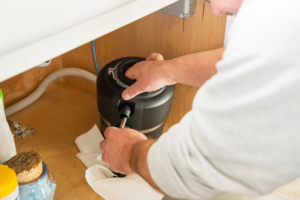
10. Leaking Garbage Disposal
If water is pooling specifically under the garbage disposal side of the sink, the disposal itself is likely the source. Years of vibration can loosen the mounting connection between the disposal and the sink, and leaks can also develop around the base of the unit. In most cases, a plumber will recommend replacing the disposal rather than attempting a temporary patch.
Types of Kitchen Sink Leaks and What They Mean
- A constant leak, even when the faucet is off, usually points to a pressurized water-supply line.
- A leak that only appears while the faucet is running typically comes from the faucet itself or the connections just beneath it.
- A leak that only shows up while the sink drains usually traces back to the P-trap or drain assembly.
- Water appearing around the sink rim points to a failed seal between the sink and countertop rather than the plumbing underneath.
If the leak source isn’t clear, the connections show heavy corrosion, or there’s already visible water damage, it’s best to stop and call a plumber rather than take the plumbing apart further.
When to Call a Professional Plumber
Not every small drip is an emergency, but a leak under the kitchen sink shouldn’t be ignored for long. Left alone, even a minor leak can warp cabinet flooring, promote mold growth, and lead to a more expensive repair down the road. Rooter Man Plumbing diagnoses and repairs kitchen sink leaks for homeowners throughout the Charleston area, from a quick washer swap to a full leak detection and repair visit for leaks that are harder to trace. If you’re dealing with water leaking from a kitchen sink and aren’t sure where it’s coming from, contact Rooter Man Plumbing to get it looked at.