

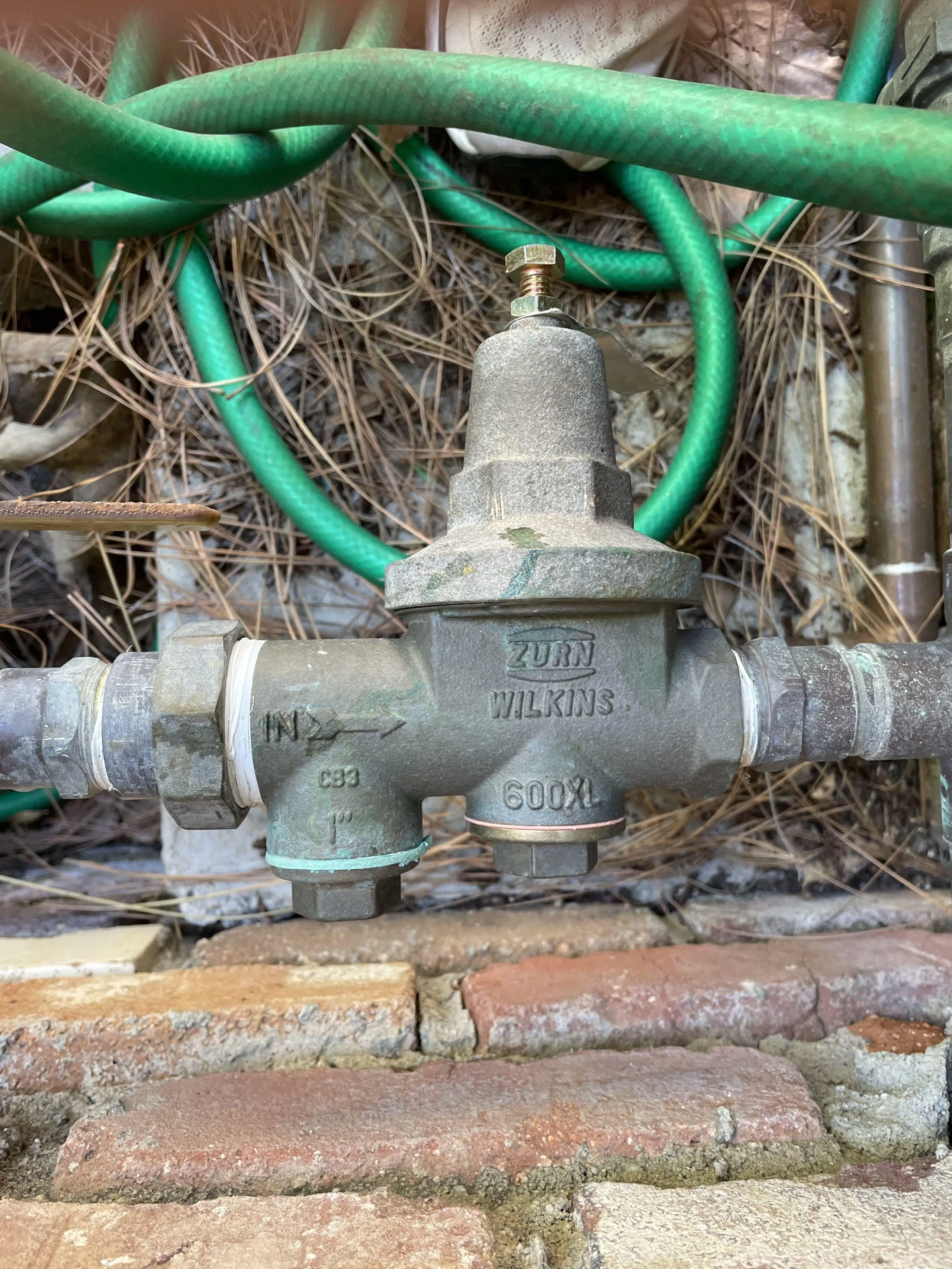
Water pressure that seems too high, too weak, or inconsistent can point to a worn pressure regulator, but it can just as easily point to something else. Replacement is only worth considering once a plumber has confirmed that the regulator is the source of the problem. A regulator, also called a pressure-reducing valve (PRV), is a valve that lowers the pressure of incoming water before it reaches the pipes and fixtures in a home.
This article explains what the valve does, which symptoms may justify a closer look, what else can produce similar changes, and what a professional evaluation involves. It also covers how a plumber decides between leaving the valve alone, repairing it, or replacing it.
What does a water pressure regulator do?
A water pressure regulator reduces the pressure of the water entering a home so the plumbing system receives a more controlled supply. It is typically installed on the main water line, near where the supply enters the house, though placement varies.
Not every home has one. Whether a property has a regulator depends on how the plumbing was built and modified over time, so it is not safe to assume one is present. A plumber can confirm that during an evaluation.
This valve is also different from other devices that people sometimes confuse with it. A water heater’s temperature-and-pressure relief valve is a safety device on the heater. A backflow preventer protects the water supply from reversed flow. A pressure gauge only displays a reading. None of these does the job of a regulator, and a problem with one does not necessarily mean a problem with another.
Signs that may justify checking water pressure
Several changes can prompt a pressure evaluation. Each of these is a reason to look closer, not proof that the regulator has failed:
- Pressure that feels noticeably stronger than it used to at most fixtures
- Pressure that rises and falls without an obvious reason
- Differences from fixture to fixture that appear throughout the house rather than at a single tap
- Banging or humming sounds in the pipes that are new or have become more noticeable
- Dripping faucets, running toilets, or small leaks that seem to be appearing in several places
Noises and leaks deserve particular care. They can be associated with pressure problems, but they have many other causes, so on their own they say very little about the regulator.
Could something other than the regulator be responsible?
Yes. Weak pressure, in particular, is often unrelated to a regulator. Several issues can produce similar symptoms, and a plumber may need to determine which one applies.
When the problem is limited to one faucet or shower, the cause is often local. A clogged aerator or showerhead, a partly closed fixture shutoff, or a worn internal part at that fixture can all reduce flow without involving the main line.
A broader change is more likely to involve the supply side of the system. Possibilities include a partially closed valve, a change in the water supply coming into the property, or a leak in the supply piping. A hidden leak may call for leak detection and repair rather than anything involving the regulator. If the concern points to the buried pipe that brings water to the house, water line repair may be the more relevant service.
Does high water pressure always mean the regulator needs replacing?
No. High pressure can mean the regulator is worn or out of adjustment, but it can also mean the home has no regulator at all, or that the cause lies elsewhere in the system. A single high reading or one unusually strong shower is not enough to conclude that a valve has failed.
Reading context matters, too. Pressure can be measured when water is not flowing or while it is running, and the two results mean different things. A reading is a piece of information, not a diagnosis, and interpreting it correctly is part of a plumber’s job.
What can you safely observe before calling?
Observation is useful. Adjustment is not. You can safely notice and describe what is happening without touching any pressurized equipment:
- Whether the change affects one fixture or the whole house
- Whether it happens at certain times or seems constant
- Whether it started suddenly or built up gradually
- Whether any visible dripping, dampness, or new noises accompany it
Do not adjust, loosen, disconnect, or remove a regulator or any other valve on the supply line, and do not try to choose or fit a replacement part. These devices are under pressure, and a mistake can cause water damage or leave the system with pressure that is worse than before. Pressure measurements and technical conclusions are best left to a qualified plumbing professional.
What a plumber may measure and inspect
A professional evaluation usually begins by establishing what the problem is before deciding what to do about it. Depending on the home, a plumber may:
- Check whether a regulator is installed and where it sits in the system
- Measure pressure at a suitable point and consider whether the conditions of the reading affect its meaning
- Compare the symptoms against a single fixture, a group of fixtures, or the whole house
- Look at the valve and nearby piping for signs of wear, leakage, or damage
- Consider whether other components, such as shutoffs or supply piping, could explain what you have noticed
The exact steps depend on the property and the plumber’s judgment, and no particular procedure can be promised in advance. For general residential plumbing questions like this, Rooter Man Plumbing’s plumbing services page is a reasonable place to start.
When might repair, adjustment, or replacement be considered?
Which path makes sense depends entirely on what the evaluation finds. In broad terms:
- No change to the valve. If the evidence points to a different cause, such as a fixture problem or a supply issue, the regulator may not need any work.
- Adjustment or repair. Some regulators can be adjusted or serviced, but only when a professional decides it is appropriate for that specific valve and condition.
- Replacement. If the valve is found to be worn, leaking, or unable to hold pressure steadily, replacing it may be the sensible choice. Whether it is also reasonable to keep an older valve in service is a judgment that belongs to the person inspecting it.
This article does not give a lifespan for regulators, cost estimates, or timelines, because those depend on the valve, the home, and the findings. Those are questions to raise during the evaluation.
Frequently asked questions
Is a failing pressure regulator an emergency?
Usually not. A suspected regulator problem is typically something to have evaluated at a reasonable pace. Active water flowing from a pipe or fitting is different and should be treated as an urgent plumbing situation.
Can a regulator cause both high and low pressure?
It may be a possibility, since a regulator that is not controlling pressure steadily could contribute to variable readings. Other causes can look identical, though, so the symptom alone does not identify the valve.
How do I know whether I have a regulator?
The most reliable way is to have a plumber check. Where a regulator is installed and what it looks like vary from home to home, so a quick look by an untrained eye can be misleading.
Is a water heater relief valve the same as a pressure regulator?
No. The relief valve on a water heater is a safety device for the heater, while a regulator manages the pressure of water entering the home. If you notice a problem with the water heater itself, see water heater installation and repair.
Next step for Charleston-area homeowners
Unusual water pressure is worth understanding, but replacing a regulator is a decision that should follow findings rather than a guess. If you have noticed changes that seem to affect your whole house, or you simply want to know whether a regulator is involved, you can contact Rooter Man Plumbing to request an evaluation. You can also call (843) 402-7799. Describing what you have observed, and when, will help the conversation get started.