

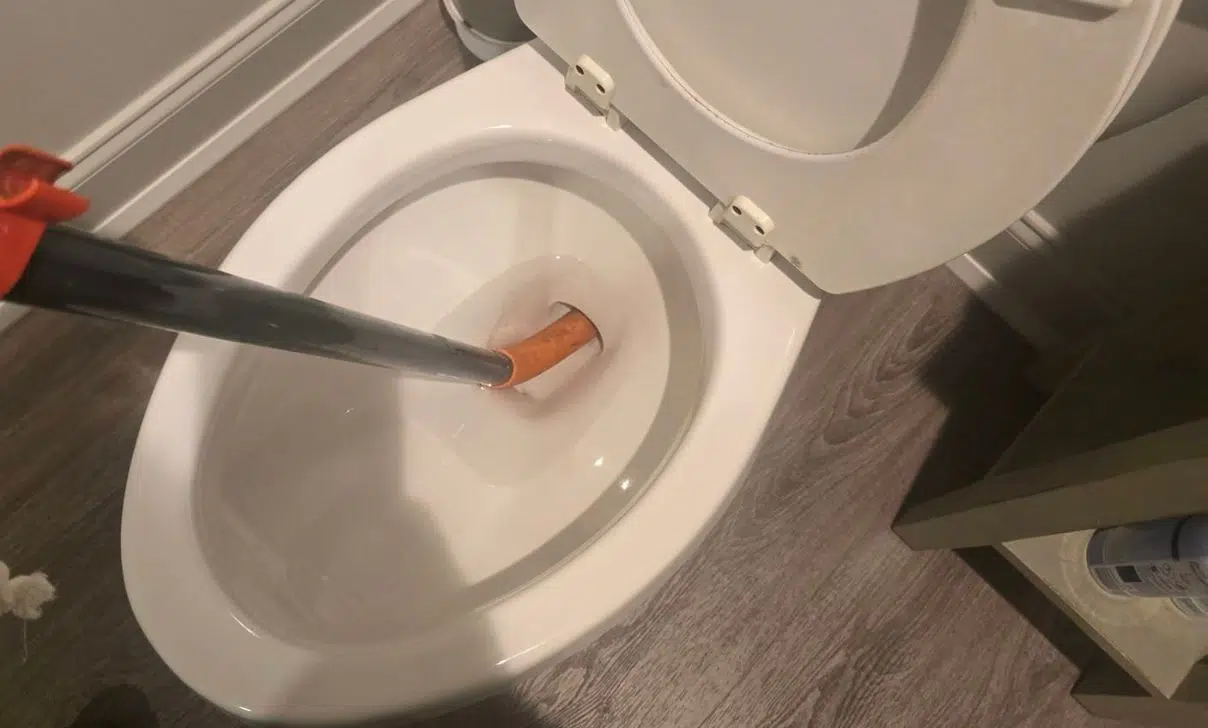
A clogged toilet often begins with something small that seemed harmless to flush. The general standard is simple: flush human waste and toilet paper, and put nearly everything else in the trash. Items like wipes, floss, cotton swabs, and paper towels may vanish on the first flush, but they can snag further down the line or build up with other material over time.
This guide goes item by item through what is and isn’t safe to flush. It also explains why “flushable” labels can mislead and which habits keep stray objects out of the bowl.
The Simple Rule: Human Waste and Toilet Paper
Toilet paper is made to break apart quickly in water. Most other products are not, even when they feel thin or soft. Wastewater utilities commonly describe the rule as “the three Ps”: pee, poop, and (toilet) paper.
That doesn’t mean any amount of toilet paper is fine. A very large wad can clog a toilet on its own, so flushing in smaller batches is a sensible habit, especially with older or low-flow fixtures.
Quick Flushability Guide
| Item | Flush it? | Why |
|---|---|---|
| Human waste | Yes | This is what the system is designed to carry |
| Toilet paper | Yes, in moderate amounts | Designed to break apart in water |
| Baby wipes and cleaning wipes | No | Most do not break down like toilet paper |
| Wipes labeled “flushable” | No | The label does not guarantee they are safe for your pipes or the public sewer |
| Paper towels, tissues, napkins | No | Made to stay strong when wet |
| Dental floss | No | Can snag on rough spots or collect other debris |
| Cotton swabs and cotton balls | No | Small, absorbent, and do not dissolve |
| Hair | No | Tangles with other material instead of dissolving |
| Feminine hygiene products and diapers | No | Designed to absorb and expand |
| Condoms | No | Latex does not break down readily |
| Small objects, toys, bottles | No | Solid items can lodge in the toilet’s trap |
Why Some Everyday Items Cause a Clogged Toilet
Most of these items cause trouble for the same reason: they don’t dissolve, and they can catch on something. Here is how that plays out for the items people ask about most.
Dental Floss
Floss is thin and strong, so it can slip through a fixture and still cause trouble later. The more likely problem is that it catches on a rough joint or on other debris, and then collects more material. How much that matters depends on the pipe’s condition and layout, which a plumber would need to see in person.
Cotton Swabs and Cotton Balls
These are small enough to disappear with one flush, which is part of the problem. Cotton absorbs water and holds together, and swab sticks are rigid. In a bend or joint, they can slow flow and give other material something to cling to.
Hair
Hair is worth separating into two cases. Hair from a hairbrush belongs in the trash, not the toilet, because it tangles with whatever else is in the line. Hair that collects in a shower or sink drain is a different issue, and it usually points to a localized drain blockage rather than a toilet problem. If your tub or sink is draining slowly, clogged drain cleaning may be the more relevant service.
Condoms
Condoms are made of latex or similar materials that don’t dissolve in water, and they can catch on other debris in the line. They are one more item that belongs in the trash, wrapped in tissue if you like.
Paper Towels and Tissues
These are easy to mistake for toilet paper. Paper towels are built to hold up when wet, and facial tissues often contain added strength agents as well. Both are better placed in the wastebasket.
Are “Flushable” Wipes Actually Safe to Flush?
Not reliably. “Flushable” is a marketing label, and it does not tell you how a wipe will behave in your toilet, your pipes, or the public sewer system. Toilet paper is designed to fall apart quickly. Many wipes hold together long enough to snag and collect other material.
The issue has been significant enough locally that Charleston Water System went to court over it. According to NACWA’s report on the case, the utility filed a federal lawsuit in January 2021 against makers and sellers of so-called flushable wipes, citing damage to sewer systems. The report also describes a proposed settlement with one manufacturer announced that April. If wipes are part of your routine, the safest approach is to keep a small lined trash can next to the toilet.
Keeping Small Objects Out of the Bowl
Not every clog comes from something someone chose to flush. Small bottles, decorative items, toys, and cosmetics can be knocked into the bowl, and a hurried flush can send them into the trap.
A few simple adjustments help:
- Avoid storing loose items on the tank lid or on shelves directly above the toilet.
- Keep the lid closed when the toilet isn’t in use, especially with young children or pets in the house.
- Move small containers to a cabinet or drawer instead of the back of the toilet.
Everyday Habits That Prevent Blockages
Good disposal habits are mostly about making the right choice the easy one:
- Keep a lidded wastebasket within arm’s reach of every toilet.
- Tell guests where the trash can is, since visitors often assume “flushable” products are fine.
- Flush toilet paper in reasonable amounts rather than one large wad.
- Put hair from brushes and combs in the trash, not the toilet.
- Check labels on new products, but treat “flushable” as a claim rather than a guarantee.
What If Something Has Already Been Flushed?
If you know something unsuitable went down, stop flushing and avoid chemical drain cleaners, which can be hazardous and complicate a plumber’s work. A single item may pass through without any visible problem, or it may lodge somewhere and cause a blockage later.
If the toilet drains slowly or won’t flush normally afterward, a plumber can assess it. Rooter Man Plumbing provides clogged toilet repair for these situations. If a toilet keeps clogging when nothing unusual was flushed, the cause may be farther down the line, and a plumber can look at whether professional drain cleaning is appropriate.
When to Contact a Plumber
Most flushing mistakes can be avoided with the habits above. But if a toilet will not drain properly, an object is stuck, or you’re not sure what went down, a professional assessment is a sensible next step. It saves guessing and helps avoid pushing a blockage deeper.
If you’re in Charleston or Summerville and are dealing with a toilet blockage or drainage issue, contact Rooter Man Plumbing to talk through what is happening. Rooter Man Plumbing is available 24/7, and after-hours calls carry an additional fee. If water won’t stop rising or sewage is backing up, our emergency plumbing service is there when you need it. You can also reach us at (843) 402-7799 or visit 2013 Bees Ferry Road, Charleston, SC 29414.