

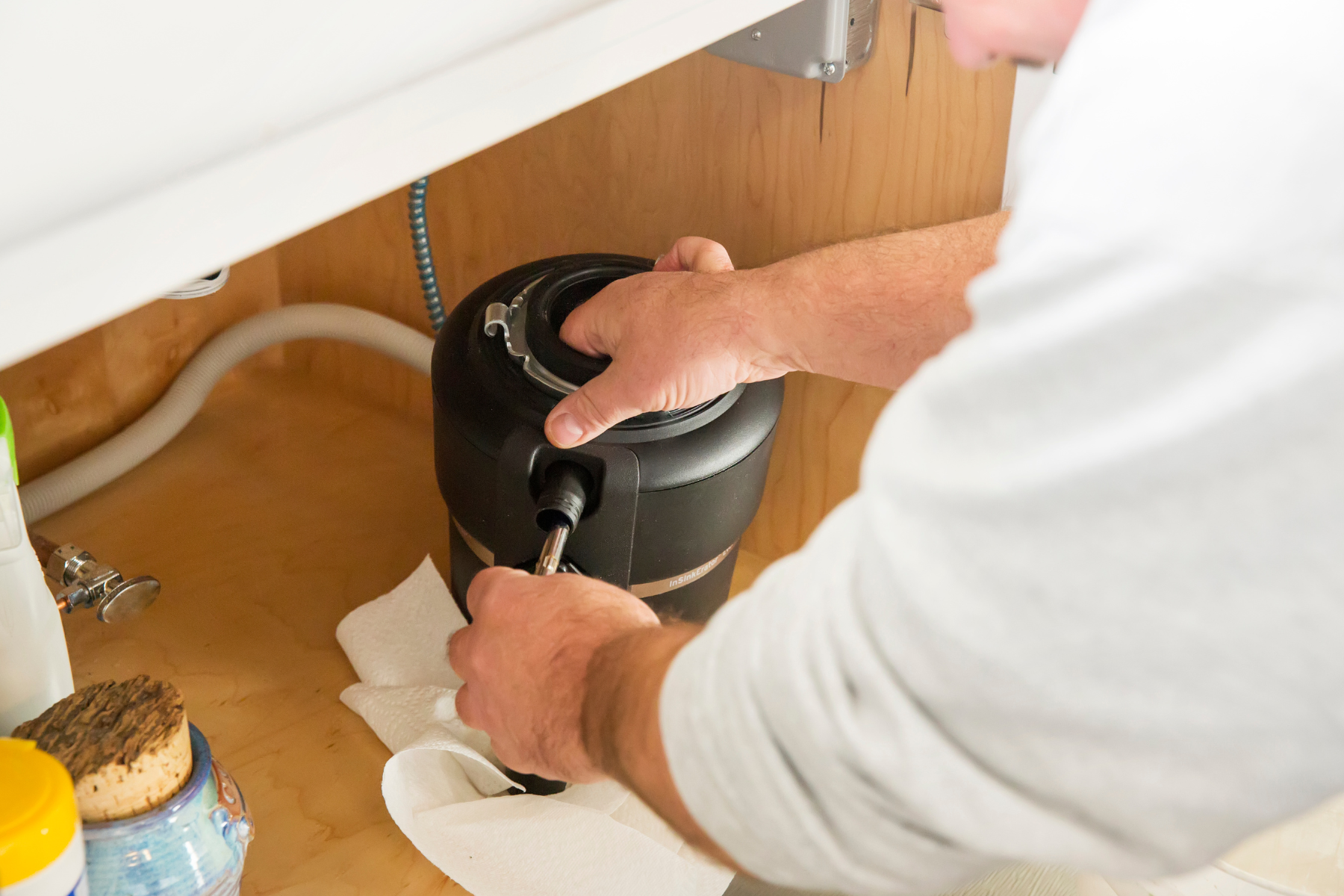
“My garbage disposal stopped working. Does it need to be replaced, or can it be repaired?” That question comes up often, and the answer depends on the symptom. A disposal that hums, shuts off, or won’t restart may have a minor issue. Leaks from the unit’s body, repeated failures, or metallic grinding may point to something bigger.
Garbage disposal repair isn’t only about the appliance. The trouble can come from the disposal, the drain piping, the connections under the sink, or a combination. This guide covers common symptoms, safe checks, what to avoid, and how to weigh repair against replacement. October is a sensible time to sort this out, before the heavier cooking of the holiday season.
Why Is My Garbage Disposal Not Working?
A disposal may stop working because of a jam, a power or reset issue, worn internal parts, or a problem in the connected drain. The sound it makes (or doesn’t make) is a useful first clue.
- Silent: The unit may not be getting power, or its overload protection may have tripped.
- Humming but not spinning: The motor may be receiving power while the grinding mechanism isn’t turning. A jam is one possible cause. A worn motor or another mechanical issue is another.
- Running but draining poorly: The disposal may be fine, and the blockage may sit in the drain line.
- Leaking: The source could be a loose connection, a worn seal, or a damaged housing.
Several different issues can produce similar symptoms, so treat these as possibilities, not diagnoses.
Common Garbage Disposal Problems and What They May Mean
Humming without grinding. This often means the motor has power but something is keeping the grinding components from turning. A jam is one possible cause. A worn motor or internal component is another, especially if the problem keeps coming back.
No response when you flip the switch. Possible causes include a tripped reset, a switch or outlet problem, or an electrical fault. Because electricity is involved, approach this symptom cautiously.
Water under the sink. Where the water appears matters. Leaks at the sink flange or drain connections can sometimes be corrected. A leak that comes from the disposal’s own housing often points toward replacement, though a plumber should confirm the source first. If water shows up but you can’t tell where it starts, leak detection and repair may help trace it. Many disposal leaks come from a visible connection or the unit itself, so not every leak calls for that step.
Slow drainage or standing water. A slow sink does not automatically mean the disposal has failed. A disposal can run normally while the connected kitchen drain is partially or fully blocked.
The kitchen sink, disposal, and dishwasher may share connected drainage components, and that line handles a lot of food waste. If the disposal runs but water barely moves, the drain deserves attention too. Professional kitchen drain cleaning addresses that part of the problem separately from the disposal itself.
Repeated resets. A unit that trips once after an overload isn’t necessarily failing. One that trips again and again could indicate overheating, a struggling motor, or a persistent jam.
Grinding, rattling, or metallic noises. Some noise comes from something stuck in the chamber. Persistent metallic sounds, or noise that continues with nothing in the unit, may indicate worn or damaged internal parts.
Odors and weak performance. Lingering smells can come from food residue in the disposal or drain, and sluggish grinding can signal wear. If cleaning doesn’t change it, more may be going on.
Shutting off during use. This can reflect overload protection, an electrical problem, or a unit nearing the end of its useful life.
What Can You Safely Check Yourself?
The safest checks are observations, not repairs. Keep three levels in mind.
Safe observation (anyone can do this):
- Confirm the wall switch is on and that other items on the same outlet or circuit have power.
- Note the symptom: silent, humming, grinding, leaking, or draining slowly.
- Look under the sink for moisture, dripping, or damp cabinet material, without reaching into the unit.
Manufacturer-directed steps (only if your model’s instructions describe them):
Many disposals have a reset feature, but its location and procedure vary by brand and model. Check your owner’s manual first. If you have an InSinkErator unit, InSinkErator’s garbage disposal troubleshooting guidance includes support pages on resetting, jams, unusual noises, and leaks. Those instructions apply to InSinkErator products, and other brands may use different steps.
Leave to a qualified professional:
Electrical work, internal repairs, and anything involving the disposal’s wiring or housing. If the sink drains poorly even though the disposal runs, that drain problem is also a job for a plumber.
What to Avoid When a Disposal Stops Working
Never put your hand or any tool into a garbage disposal, even if the switch is off. Only follow a jam-clearing procedure if your manufacturer’s instructions describe one for your model, and follow every safety step they list.
Also avoid:
- Repeatedly flipping the switch or hitting reset when the unit hums and won’t spin, since this may strain the motor
- Opening electrical components or working on wiring unless you are qualified
- Tightening or disassembling plumbing connections without knowing what is leaking
- Pouring harsh chemical drain products into a disposal or sink that isn’t draining
Can a Plumber Repair a Garbage Disposal?
Yes, a plumber can often repair or address garbage disposal problems. Not every unit is worth repairing, though, and not every problem lives inside the disposal.
During an evaluation, a plumber may check whether the disposal operates, whether it leaks and from where, how the connections and drain piping look, and whether the sink drains properly. Sorting out which component is responsible is the point of the visit, since the disposal, the plumbing, or both could be involved. Kitchen sink and disposal work falls within Rooter Man’s broader Charleston plumbing services.
Garbage Disposal Repair vs. Replacement
Repair is more likely to make sense when the cause is localized and the unit is otherwise in good shape. Replacement may be the better choice when the failure is mechanical, widespread, or recurring. No single rule applies, and neither age nor a single symptom decides it alone. These factors matter:
- Type of failure. A loose connection or a correctable drain issue differs from a failed motor or damaged internal parts.
- Location of the leak. A leak at a connection may be repairable. A leak through the disposal housing often means the unit itself has failed.
- Overall condition. An older unit with a minor problem may still be worth repairing, and a newer unit with serious damage may not be. Age is one factor among several.
- Recurrence. Repeated resets, noises, or breakdowns suggest the unit may be wearing out.
- Practicality. If the repair would be extensive, replacement may be the more sensible use of money.
- Your needs. A household that cooks heavily may want a unit suited to that demand, which is a good question to raise during evaluation.
Lifespan varies by model, use, and what goes down the drain, so no universal number applies. Your owner’s manual or the manufacturer is the right source for model-specific details.
When to Stop Troubleshooting and Call a Plumber
It’s time to bring in a professional if:
- The disposal is leaking
- It hums or trips repeatedly
- It makes persistent grinding, rattling, or metallic noises
- The sink drains slowly or backs up even after the disposal runs
- You suspect an electrical problem
- You can’t tell whether the issue is the disposal or the plumbing
A kitchen sink that backs up along with other drains in the home is a different situation and may involve a larger line.
Next Step for Charleston-Area Homeowners
Rooter Man Plumbing has served the Charleston area since 2006, handling residential and commercial plumbing. If your disposal is leaking, repeatedly failing, making unusual noises, affecting the sink drain, or can’t be safely diagnosed with basic checks, contact Rooter Man Plumbing to discuss the symptoms and arrange an evaluation.
Knowing whether you face a repairable issue or a replacement decision before holiday cooking starts can save you a messy surprise in the kitchen.