

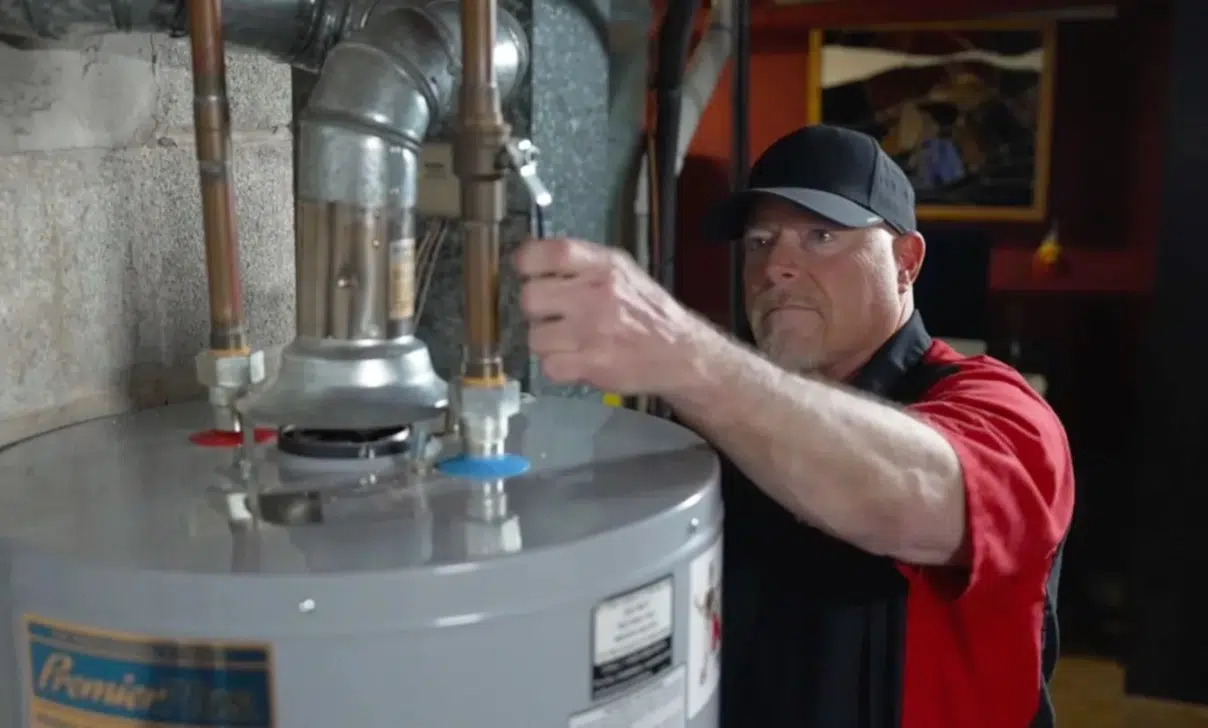
If your tank starts making popping or rumbling noises, the most likely cause is buildup at the bottom of the heater. Sediment and scale can trap water underneath the layer, forcing that water to overheat and burst through in small pockets. That is why many calls for water heater repair start with noise long before the unit completely stops producing hot water.
The bigger issue is not the sound alone. It is what the sound usually points to: reduced efficiency, extra strain on the tank, and a shorter window before a manageable fix turns into a more expensive decision.
Catch it early, and a flush or targeted service may help. Wait too long, and the same buildup can keep wearing the system down.
Why is my water heater popping?
Popping usually means mineral sediment has settled at the bottom of the tank and hardened enough to interfere with normal heating.
As the burner or heating element warms the tank, water trapped beneath that layer overheats and pushes upward, creating the sound. The noise is common, but it should not be ignored because it often shows up alongside declining performance.
What does sediment buildup actually do inside a tank?
It creates a barrier between the heat source and the water you are trying to heat. That makes the unit work harder and often longer to deliver the same result. Over time, that extra strain can mean slower recovery, inconsistent hot water, and more wear inside the tank.
Rooter-Man SC specifically offers repair services for gas, electric, and tankless water heaters, which matters because the right fix depends on the system type and how far the buildup has progressed.
Can a tank flush stop the noise?
Sometimes, yes. If the tank still has good life left and the buildup has not gone too far, flushing out sediment can reduce the popping and help the heater run more efficiently again.
This is the fast-fix side of the problem people hope for. It is not a guarantee, but it is often the first practical step before jumping to replacement.
When should you call for water heater maintenance instead of waiting?
Call sooner if the noise is getting louder, the hot water runs out faster, or the heater seems slower to recover than it used to.
Those signs usually mean the buildup is doing more than making noise. Rooter-Man SC’s service pages emphasize both repair and preventive plumbing support, which is useful here because the right call is often not emergency replacement. It is timely service before the tank gets pushed further.
What other symptoms usually show up with sediment problems?
Noise rarely arrives alone. Many homeowners also notice fluctuating water temperature, less available hot water, or a heater that seems to cycle longer than before. If those issues show up together, it becomes easier to connect the dots. The unit is not just aging quietly. It is often losing efficiency while buildup continues to collect at the bottom.
How do you decide between repair and replacement?
Start with condition, not fear. If the tank is still structurally sound and the main issue is sediment, service may still buy you real time.
If the unit is leaking, badly corroded, or showing multiple signs of broader failure, replacement becomes easier to justify. Rooter-Man SC handles both repairs and installations, so the recommendation does not have to start and end with one option. That kind of evaluation is what keeps people from replacing too soon or waiting too long.
Why does hard water make this worse?
Hard water leaves behind more minerals, and those minerals settle in the tank over time. In areas where mineral content runs higher, buildup can become a recurring issue rather than a one-time nuisance.
That is one reason some systems seem to get noisy faster than expected. The heater is doing the same job, but the water quality is making the work harder.
What should you check before requesting service?
Keep it simple:
- Note whether the sound is occasional or constant
- Pay attention to any change in hot water volume or temperature
- Look for visible leaks around the tank
- Think about whether the noise has been getting worse
- Tell the plumber whether the unit is gas, electric, or tankless
That information helps narrow the likely cause faster. Rooter-Man SC serves Charleston, North Charleston, Mount Pleasant, James Island, Johns Island, Goose Creek, West Ashley, Hollywood, Summerville, and nearby areas, so local homeowners can request service with details that make the visit more productive.
Final Thoughts
A popping tank does not always mean the heater is done. Often, it means sediment has been sitting too long and the system needs attention before the wear gets worse.
That is the real goal of water heater repair in this situation: restore performance, reduce strain, and avoid turning a fixable maintenance issue into an early replacement. If your property is undergoing renovations or upgrades, you may also find Temporary Plumbing Solutions for Commercial Construction in Charleston helpful for maintaining reliable plumbing service during the project. If your heater is making noise and you want a clear answer instead of guesswork, request an appointment with Rooter-Man SC through their contact page.